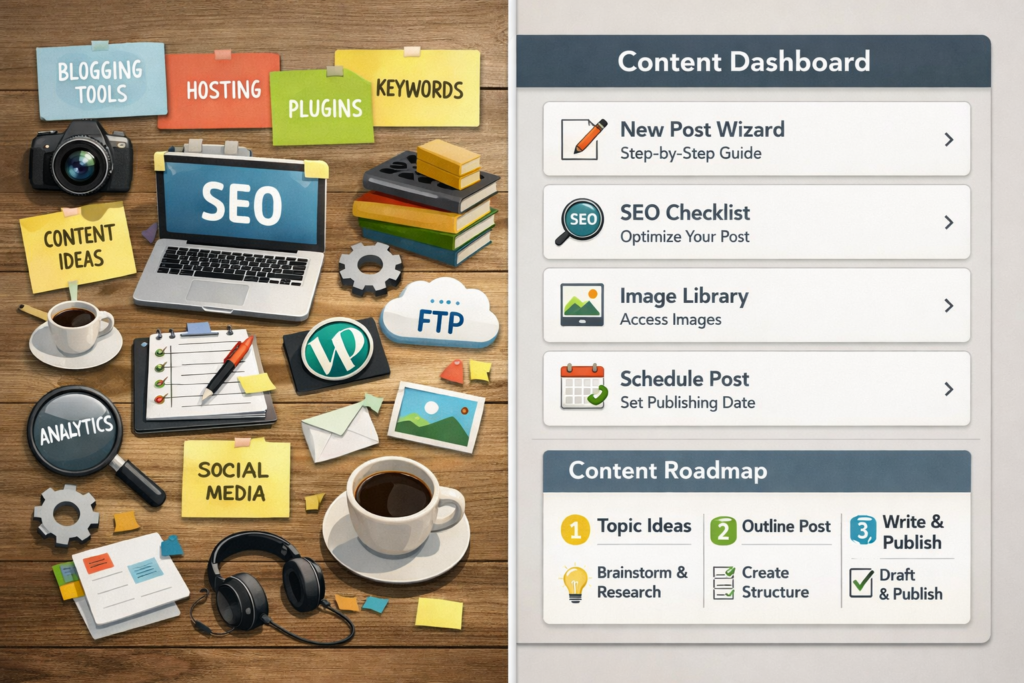
Starting a blog in 2026 looks simple from the outside. Buy a domain. Install WordPress. Write articles. Add affiliate links. Wait for traffic.
Then the real work begins.
You need a niche, hosting, keyword research, content planning, SEO basics, publishing discipline, affiliate disclosure, site speed, support, and enough confidence to keep going when the first few posts do not rank overnight.
Updated for 2026. Platform pricing, features, and plan limits can change, so verify current details before joining.
The quick answer
Wealthy Affiliate wins for beginners who want training, hosting, keyword research, support, and a step-by-step affiliate blogging workflow in one place. DIY blogging wins for people who already understand WordPress, hosting, plugins, SEO tools, site security, backups, analytics, and content strategy.
DIY blogging gives you more control. Wealthy Affiliate gives you more structure. In 2026, that structure can matter more than most beginners realize.
Blogging readiness check: which path fits you?
Before comparing tools and prices, answer these five questions honestly. Your answers will tell you whether you need freedom, structure, or a little of both.
- Do you already know how to buy a domain, connect hosting, install WordPress, and secure your site?
- Can you create a keyword plan without guessing what people search for?
- Do you understand how affiliate programs, internal links, disclosures, and buyer-intent content work together?
- Are you comfortable fixing plugin conflicts, site speed issues, backups, and basic WordPress errors?
- Can you stay consistent for 90 days without someone showing you what to do next?
Mostly yes? DIY blogging may fit you well.
Mostly no? Wealthy Affiliate may save you from weeks of setup confusion.
Somewhere in between? Start with a guided platform, learn the system, then decide later whether you want a more custom setup.
Why this comparison matters more in 2026
Blogging is not dead. But lazy blogging is.
The old shortcut was simple: publish a pile of keyword posts, add affiliate links, and hope search traffic shows up. That approach is weaker now. Readers are more skeptical. Search engines are more demanding. AI tools have made average content easier to produce, which means average content is easier to ignore.
That is actually good news for serious beginners.
A new affiliate blogger can still build a real online asset. But the blog needs a clear audience, useful articles, trustworthy product framing, original perspective, and a workflow that keeps publishing from turning into guesswork.
That is where the Wealthy Affiliate versus DIY blogging decision becomes important. You are not only choosing where to build a website. You are choosing how much of the business-building process you want to figure out alone.
What is Wealthy Affiliate?
Wealthy Affiliate is an online business platform built around affiliate marketing, niche websites, WordPress publishing, training, web hosting, AI-assisted tools, keyword research, and community support.
Instead of sending beginners to collect separate tools from separate companies, it puts much of the early affiliate blogging workflow inside one environment. That matters because most beginners do not fail from lack of ideas. They fail from too many disconnected steps.
They pick a niche, then doubt it. They install WordPress, then feel overwhelmed. They write a post, then wonder why no one reads it. They hear about SEO, then drown in conflicting advice.
Wealthy Affiliate helps by answering the question many new bloggers quietly ask:
“What should I do next?”
That does not guarantee income. No platform can honestly promise that. But it can reduce the number of places where a beginner normally gets stuck.
What is DIY blogging?
DIY blogging means you build the website stack yourself. You choose your domain registrar, hosting company, WordPress theme, plugins, keyword research tool, writing process, email platform, analytics setup, backup system, security tools, and training resources.
That route can be powerful. Many experienced bloggers prefer it because it gives them full control. You can choose every part of the system, replace tools whenever you want, and build a lean setup that fits your exact style.
But DIY blogging has a hidden requirement. You must become your own project manager.
You are not just the writer. You are the tech person, strategist, SEO learner, plugin tester, site-speed fixer, security monitor, and monetization researcher. Some people enjoy that. Others find it exhausting before the blog ever has a chance to grow.
Wealthy Affiliate vs DIY blogging: side-by-side comparison
| Category | Wealthy Affiliate | DIY Blogging | Best fit |
|---|---|---|---|
| Beginner setup | Guided setup with training, website tools, hosting, keyword research, and support in one place. | You choose and connect each part yourself. | Wealthy Affiliate for beginners. |
| Control | Strong enough for most new affiliate bloggers, but inside a defined platform ecosystem. | Full control over hosting, themes, plugins, tools, and workflows. | DIY for advanced users. |
| Learning curve | Training is organized around building an affiliate business step by step. | You decide what to learn, where to learn it, and in what order. | Wealthy Affiliate for structure. |
| Keyword research | Keyword research is connected to the WA blogging workflow. | You need a separate keyword tool or a manual research process. | Wealthy Affiliate for simplicity. |
| Technical responsibility | Less tool-stitching and fewer setup decisions early on. | You manage hosting, updates, backups, plugins, security, and compatibility. | Depends on your comfort level. |
| Cost clarity | Major beginner tools are bundled into membership tiers. | Costs can spread across hosting, plugins, courses, keyword tools, themes, and support. | Wealthy Affiliate for predictable setup. |
| Support | Community and platform support are part of the experience. | You rely on host support, plugin support, forums, YouTube, paid courses, or trial and error. | Wealthy Affiliate for beginner support. |
| Long-term flexibility | Good for building inside one guided environment. | Best for custom stacks and advanced control. | DIY for experienced site owners. |
The real cost comparison is not as simple as it looks
At first glance, DIY blogging looks cheaper. You might buy a domain, find a budget host, install WordPress, and start writing.
That is the clean version.
The messy version usually arrives later. You need keyword research. You need SEO guidance. You need a theme that does not slow the site down. You need plugins that do not fight each other. You need backups, security, analytics, internal linking, affiliate disclosures, and a content plan that does not collapse after five posts.
Some of those tools are free. Some are paid. Some are technically free until they cost you hours of confusion.
DIY can be cheaper
DIY blogging can start with a low hosting bill and free WordPress tools. This works best if you already know what you need and what to avoid.
WA can be cleaner
Wealthy Affiliate bundles much of the beginner workflow, which can make the path easier to understand and easier to follow.
The hidden cost is delay
The most expensive beginner mistake is not always buying the wrong tool. It is losing months because you never get past setup.
According to Wealthy Affiliate’s public pricing page at the time of this update, Starter is free, Premium is listed at $41/month when billed yearly at $497, and Premium Plus+ is listed at $49/month when billed yearly at $588. Because pricing and plan limits can change, use those numbers as a snapshot, not a permanent promise.
Source note for readers: Always verify current plan details on Wealthy Affiliate’s official pricing page before upgrading.
Where Wealthy Affiliate wins in 2026
1. It reduces beginner friction
The biggest beginner problem is not usually motivation. It is friction.
Which niche should you choose? Which host is safe? Which theme should you install? Which plugins matter? Which keyword tool should you trust? Which article should come first? Which SEO advice is current?
Each question slows the beginner down. Wealthy Affiliate wins by reducing those early decisions. Instead of building your own system before building your business, you can start with a guided environment and focus on learning the model.
2. It gives beginners a repeatable workflow
Affiliate blogging is not one task. It is a sequence.
Choose a niche. Understand the audience. Research keywords. Build a website. Publish helpful content. Add internal links. Join relevant affiliate programs. Build trust. Improve old posts. Repeat.
DIY beginners often learn those steps out of order. They spend three weeks adjusting a logo and almost no time understanding search intent. Or they chase a high-paying affiliate program before they understand what their readers need.
Wealthy Affiliate gives the beginner a more logical path.
3. It connects keyword research to content planning
Keyword research is where many new blogs fail before they start. Beginners often target phrases that are too broad, too competitive, or too disconnected from buyer intent.
Wealthy Affiliate’s Jaaxy-focused workflow helps beginners think about keywords in a more practical way. The goal is not to chase the biggest keyword. The goal is to find reachable topics that match what a real reader wants to know.
4. It offers support when momentum drops
Most beginner bloggers hit a wall. Maybe the site is live, but traffic is quiet. Maybe a post does not rank. Maybe the niche starts to feel boring. Maybe a technical question stops progress for a week.
DIY bloggers can search forums and watch videos, but that can turn into another rabbit hole. Wealthy Affiliate’s community and platform support give beginners somewhere to ask questions without feeling completely alone.
5. It is built around affiliate marketing from the start
A generic blog setup teaches you how to publish. Wealthy Affiliate is more focused on publishing with a business goal.
An affiliate blog needs more than articles. It needs trust, product fit, buyer education, disclosures, comparison content, review content, internal links, and a reason for readers to believe the site. Wealthy Affiliate is not magic, but its training is aimed at that business model instead of blogging in general.
Where DIY blogging wins in 2026
1. You get maximum control
DIY blogging wins when control matters most. You choose your host, theme, plugins, page builder, email platform, SEO tools, analytics setup, caching solution, and editorial workflow.
For an experienced blogger, that control can be a major advantage. You can build exactly what you want and avoid paying for bundled tools you do not need.
2. You can build a lean custom stack
If you already know what you need, DIY can be efficient. You might use a lightweight theme, a reliable host, a few trusted plugins, a separate keyword tool, and a simple publishing checklist.
That setup can work beautifully. The key phrase is “if you already know what you need.” Beginners often do not.
3. You are not tied to one platform environment
Some people prefer independence. They do not want hosting, training, research, and support inside one membership. They want separate tools and the freedom to swap each one.
That is a valid reason to choose DIY. If you are comfortable managing your own stack, the DIY route gives you room to build in your own style.
The honest verdict
Wealthy Affiliate is the better beginner path if your biggest risk is getting overwhelmed, stuck, or scattered.
DIY blogging is the better path if your biggest priority is full control and you already have the technical confidence to manage the moving parts.
For most first-time affiliate bloggers, the winner is Wealthy Affiliate because the early battle is not customization. The early battle is consistency.
The Google Discover and SEO angle
Here is where 2026 gets interesting. Beginners often think SEO is only about keywords. Keywords still matter, but they are not enough.
Google’s own guidance continues to point creators toward helpful, reliable, people-first content. That means an affiliate blog needs to do more than repeat product specs or copy what every other review says. It needs a reason to exist.
That is true whether you choose Wealthy Affiliate or DIY blogging.
A Wealthy Affiliate member still has to create useful content. A DIY blogger still has to build trust. Neither path magically earns visibility. The difference is the workflow. A guided platform can help a beginner create structure faster. A DIY setup can work just as well if the blogger already understands how to plan content around real reader needs.
For Google Discover, the goal is not clickbait. The goal is a compelling article with a clear angle, a strong image, a satisfying mobile reading experience, and a headline that captures the truth of the piece without exaggeration.
Which path is better for affiliate marketing?
For affiliate marketing specifically, Wealthy Affiliate has the advantage for beginners because it is designed around the affiliate business model.
DIY blogging teaches you how to run a site if you are willing to assemble the education yourself. Wealthy Affiliate teaches around a more specific goal: building a niche site that can attract an audience and eventually monetize through affiliate links, ads, or related offers.
That does not mean every Wealthy Affiliate member succeeds. Success still depends on niche choice, content quality, consistency, traffic, offers, and the ability to build trust with readers.
DIY can also work very well for affiliate marketing, especially if you already understand content strategy. Many strong affiliate sites are DIY sites. The risk is that beginners may spend too much time building the machinery and not enough time publishing useful content.
The 90-day difference: guided path vs self-built path
The first 90 days reveal the real difference between these two options.
With Wealthy Affiliate
A beginner can spend the first 90 days choosing a niche, building a basic site, learning keyword research, publishing foundational articles, asking questions, and developing a repeatable writing rhythm.
The main advantage is momentum. The platform gives you fewer excuses to stop at the setup stage.
With DIY blogging
A beginner may spend the first 90 days choosing hosting, installing WordPress, testing themes, comparing plugins, watching tutorials, fixing technical issues, researching SEO tools, and trying to decide what to publish.
The main advantage is control. The main risk is delay.
If you are a fast technical learner, DIY can be rewarding. If you are trying to build confidence and publish consistently, Wealthy Affiliate is usually the smoother starting path.
Common beginner mistakes on both paths
Mistake 1: Choosing a niche only because it pays well
High commissions look exciting, but a niche still needs reachable content opportunities and real reader interest. A beginner is better off choosing a niche they can explain clearly and write about consistently.
Mistake 2: Publishing content without a plan
Random posts create random results. A stronger approach is to build topic clusters around the questions your audience asks before they buy, compare, troubleshoot, or commit.
Mistake 3: Treating AI as the whole strategy
AI can help with outlines, drafts, research organization, and idea generation. It cannot replace judgment, experience, examples, product understanding, or trust. In 2026, the strongest beginner blogs will use AI as a helper, not a mask.
Mistake 4: Expecting income too quickly
Affiliate blogging is a business asset, not a vending machine. New sites need time to earn trust. The early goal is not instant money. The early goal is publishing useful content, learning what readers want, and improving the site over time.
Mistake 5: Ignoring the reader
The best affiliate content helps the reader make a better decision. It does not shove links into every paragraph. Whether you use Wealthy Affiliate or DIY blogging, the reader has to come first.
Who should choose Wealthy Affiliate?
Wealthy Affiliate is the better choice if you are new to affiliate marketing and want one place to learn, build, research, and ask questions. It is also a strong fit if you have tried blogging before but got stuck because the process felt scattered.
Choose Wealthy Affiliate if you want:
- A beginner-friendly affiliate marketing roadmap.
- Website building and hosting support in one place.
- Keyword research tools connected to your content workflow.
- A community where you can ask questions.
- A more structured path than searching YouTube every time you get stuck.
- A way to test the platform before committing to a paid plan.
For many beginners, the free Starter option is the cleanest way to see whether the platform feels right.
Who should choose DIY blogging?
DIY blogging is the better choice if you already understand the basics of WordPress, hosting, SEO, plugins, keyword research, and site maintenance. It is also a good fit if you enjoy building systems from scratch.
Choose DIY blogging if you want:
- Full control over hosting, themes, plugins, and tools.
- A custom stack built around your exact preferences.
- Freedom to switch individual tools whenever you want.
- Lower initial costs if you already know which tools to use.
- A more technical, hands-on learning experience.
DIY blogging is not the wrong path. It is just less forgiving for beginners who need structure.
My practical recommendation
If you are brand new, start with Wealthy Affiliate’s free option and use it as a testing ground. Do not join with the idea that a platform will make success automatic. Join to see whether the training, tools, and workflow help you move faster than you would on your own.
If you already have a site, know WordPress, and have a clear content strategy, DIY may be enough. You might not need a bundled platform. You may only need a better publishing plan, stronger keyword research, and more consistent execution.
But if you are still asking, “Where do I start?” or “What should I do next?” then Wealthy Affiliate has the stronger beginner advantage in 2026.
Final verdict: which path wins?
For most beginners, Wealthy Affiliate wins in 2026.
Not because DIY blogging is bad. It is not. DIY blogging can be powerful, flexible, and affordable for people who know how to manage the moving parts.
Wealthy Affiliate wins for beginners because it solves the bigger early problem: confusion. It gives you a clearer path, built-in training, keyword research support, hosting, community help, and a workflow aimed at affiliate marketing.
The best path is the one that keeps you building. If DIY gives you energy, choose DIY. If DIY makes you stall, choose structure.
In 2026, the winning blogger is not the person with the most tools. It is the person who understands the audience, publishes helpful content consistently, and keeps improving long enough for the site to become an asset.
FAQs: Wealthy Affiliate vs DIY Blogging in 2026
Is Wealthy Affiliate better than starting a blog on my own?
Wealthy Affiliate is better for beginners who want training, hosting, keyword research, and support in one place. Starting on your own is better if you already know how to manage hosting, WordPress, plugins, SEO tools, and content strategy.
Is DIY blogging cheaper than Wealthy Affiliate?
DIY blogging can be cheaper at the start, especially with budget hosting and free plugins. But the real cost depends on the tools, training, keyword research software, themes, support, and time you need. For beginners, cheap can become expensive if confusion stops progress.
Can I make money with Wealthy Affiliate?
Wealthy Affiliate can teach the affiliate marketing process and provide tools to help you build a niche website, but income is never guaranteed. Results depend on your niche, content quality, consistency, traffic, offers, and ability to build trust with readers.
Can I make money with a DIY blog?
Yes, a DIY blog can earn money through affiliate marketing, ads, digital products, services, email marketing, sponsorships, and other methods. The challenge is that you must build and manage the system yourself.
Should beginners use WordPress for affiliate marketing?
WordPress remains one of the most flexible choices for affiliate sites because it gives you ownership, publishing control, plugin options, and room to grow. Beginners still need to learn the basics of site structure, SEO, security, speed, and helpful content.
What is the safest way to start?
The safest way is to avoid big promises and start with a learning-first mindset. Test a platform, choose a realistic niche, publish useful content, learn keyword research, and build slowly. Wealthy Affiliate’s free Starter option can be a low-risk way to explore the guided route before deciding whether to upgrade.
Ready to compare the guided path for yourself?
If you want to start affiliate blogging without piecing together every tool alone, Wealthy Affiliate is worth testing. Start free, look around, study the training path, and decide whether the structure helps you move forward.
