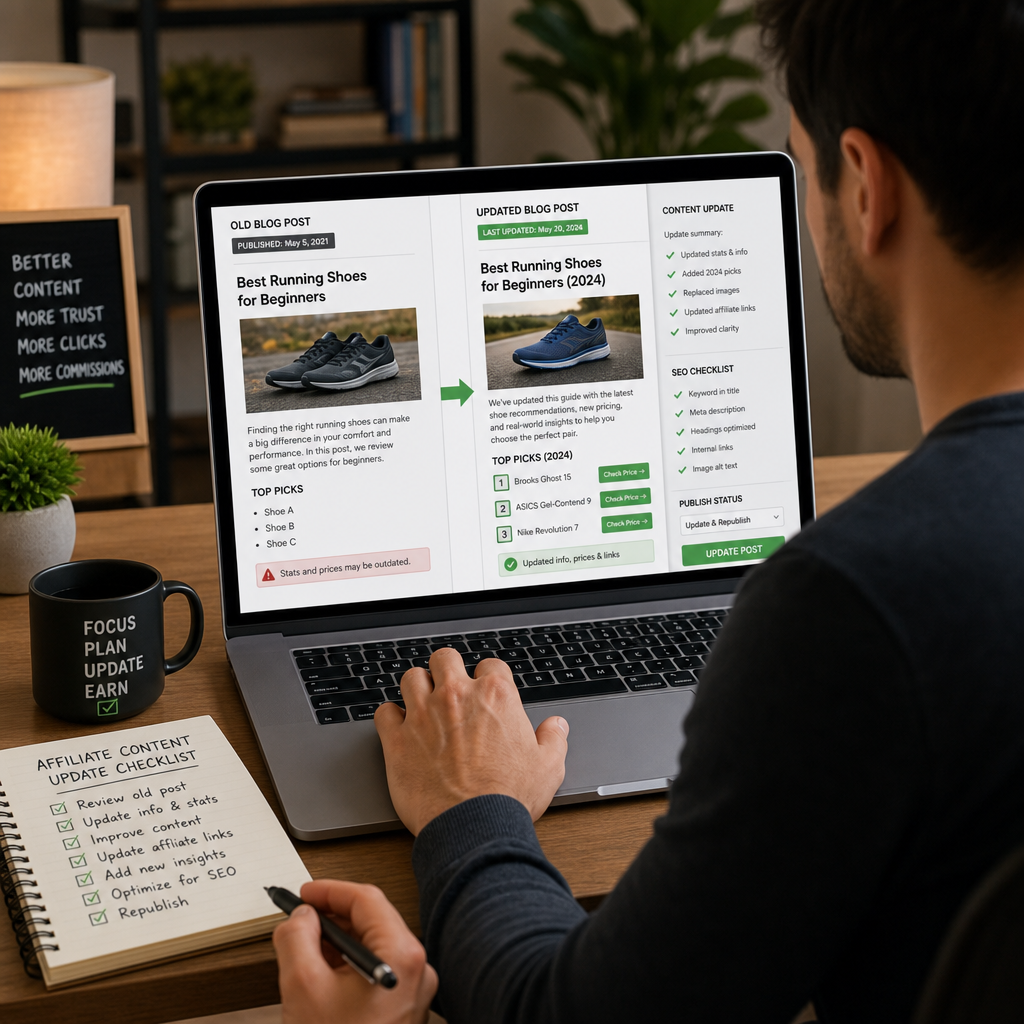
Before You Write Another Post, Refresh the Ones That Already Exist
New content matters, but old affiliate posts can quietly lose trust, accuracy, clicks, and search value. A smart refresh system helps beginners improve what they already built before chasing the next shiny topic.
Quick Answer: When Should You Refresh an Affiliate Post?
Refresh an affiliate post when the advice, links, screenshots, prices, product details, disclosure language, search intent, or internal links are outdated. You should also refresh posts that get impressions but few clicks, rank on page two, mention old years, or recommend tools without explaining who they actually fit.
Affiliate marketers love publishing new content. That makes sense. Every new article feels like another chance to rank, help a reader, and earn a commission.
But there is a problem. If your older posts are weak, outdated, or disconnected from your newer strategy, publishing more content may not fix the real issue. It can make the website feel larger without making it more useful.
OnlineAffiliate.net already teaches beginners to choose a focused niche, build helpful content, and compare tools honestly. This refresh checklist adds the missing maintenance layer: how to keep that content trustworthy after it has been published.
Why Content Refreshing Matters More in 2026
Search engines and readers are both less forgiving of thin, outdated affiliate content. A post that was “good enough” two years ago may now need clearer examples, better structure, fresher information, stronger disclosures, and more honest comparisons.
Google’s own guidance emphasizes helpful, reliable, people-first content. For affiliate publishers, that means the page should solve the reader’s problem before it asks for a click.
The FTC also expects clear disclosure when there is a material connection between the publisher and the product being recommended. That makes disclosure placement and plain wording part of content quality, not a footnote.
Refresh vs. Rewrite vs. Delete
| Action | Use It When | Best Next Step |
|---|---|---|
| Refresh | The topic is still useful, but details, examples, links, or structure need updating. | Keep the URL, improve the content, update internal links, and clarify recommendations. |
| Rewrite | The topic is valuable, but the article no longer matches search intent or site standards. | Rebuild the article around the reader’s current question and preserve only what still helps. |
| Merge | Two or more posts answer nearly the same question and compete with each other. | Create one stronger guide and redirect or de-emphasize the weaker duplicate. |
| Delete or noindex | The post is outdated, low-value, off-brand, or no longer relevant to your audience. | Remove only after checking whether it has links, traffic, or a better page to redirect toward. |
The Affiliate Content Refresh Checklist
1. Check the Promise
Does the headline still match what the article delivers? If the title promises a clear answer, the first section should give one quickly.
2. Update the Facts
Review dates, pricing, platform features, screenshots, plan names, product claims, and examples. Remove anything you cannot verify.
3. Improve the First 100 Words
Readers should immediately know who the article is for, what problem it solves, and whether they are in the right place.
4. Clarify Affiliate Links
Explain why a tool is recommended, who it fits, who should skip it, and what limitations matter before the reader clicks.
5. Add Internal Links
Point readers to helpful supporting pages, such as your niche guide, beginner roadmap, or platform comparison.
6. Strengthen the Ending
End with a useful next step, not a desperate sales pitch. The reader should leave with clarity.
A Simple 20-Minute Refresh Routine
Which Posts Should You Refresh First?
Start with pages that already show signs of potential. You do not need to refresh everything at once.
- Posts with impressions but low click-through rates
- Posts ranking near the bottom of page one or on page two
- Posts that mention an old year in the title or introduction
- Reviews with outdated pricing, screenshots, or feature claims
- Articles with affiliate links but weak explanations
- Older posts that do not link to your best newer guides
- Pages that no longer match your current site direction
Helpful Internal Links to Add While Refreshing
When a post mentions choosing a direction, link to How to Choose an Affiliate Marketing Niche.
When a post explains beginner setup, link to Wealthy Affiliate for Beginners.
When a post discusses building a business path, link to A Practical 4-Step Make Money Online Affiliate Business.
When a post compares doing everything yourself versus using a guided platform, link to Build It Yourself or Use Wealthy Affiliate?.
When a post discusses modern content quality, link to The New Era of Content.
Ethical Affiliate Positioning
Refreshing content is also a chance to make your recommendations more trustworthy. Do not hide the relationship. Do not oversell the result. Do not imply that a platform, course, tool, or keyword method guarantees income.
A better affiliate recommendation sounds like this:
That kind of wording respects the reader. It gives context, sets expectations, and makes the recommendation feel earned.
Four-Question Knowledge Check
FAQs
How often should I refresh affiliate content?
Review your most important affiliate posts at least twice a year. Reviews, comparisons, pricing pages, and tool guides may need more frequent updates.
Should I change the publish date when I update a post?
Only update visible dates when the content has been meaningfully reviewed and improved. Changing a date without improving the article can damage trust.
Can refreshing old content improve rankings?
It can help when the refresh improves usefulness, accuracy, structure, internal links, and search intent alignment. There is no guarantee, but better content gives the page a stronger chance.
Should I remove affiliate links from older posts?
Remove or replace affiliate links when the product is outdated, unavailable, poorly matched, or no longer something you can honestly recommend.
Is refreshing better than publishing new content?
Both matter. New content expands your reach, while refreshed content protects and improves the value of what you already built.
Final Takeaway
Before writing another article, choose one older post and make it more useful today. Update the facts, clarify the recommendation, add better internal links, and make the reader’s next step obvious.
Start With a Beginner-Friendly Path Review Your Niche FocusAffiliate disclosure: Some links on OnlineAffiliate.net may be affiliate links. If you choose to buy through those links, the site may earn a commission at no extra cost to you. Recommendations should always be based on fit, usefulness, and realistic expectations.
