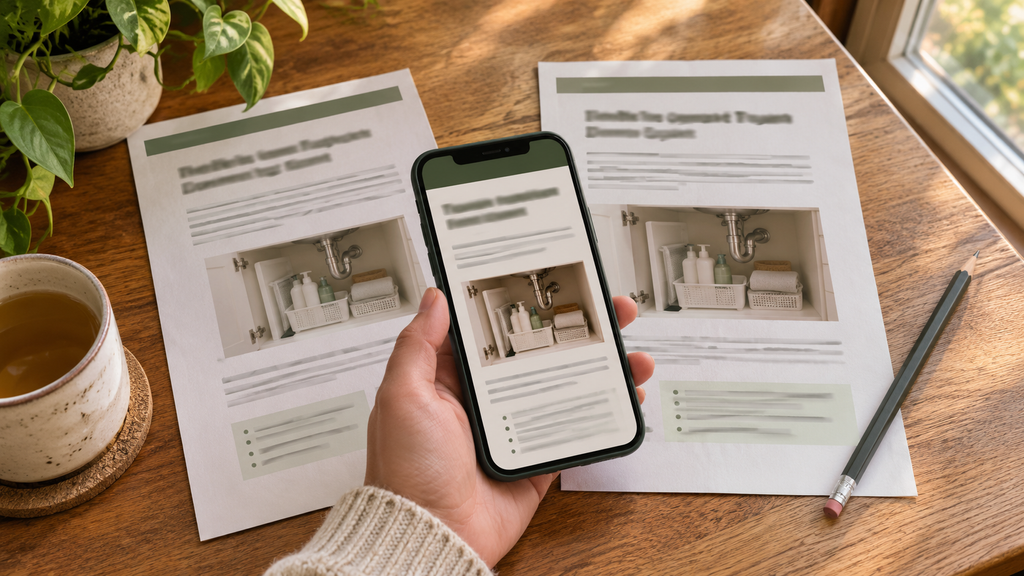
Your draft says “Kitchen Storage Guide.” The person you wrote it for is crouching beside a sink cabinet, wondering whether a two-tier organizer will clear the drainpipe. Give them a title they can recognize from where they’re sitting.
Affiliate disclosure. OnlineAffiliate.net may earn a commission if you buy a qualifying Wealthy Affiliate membership or AIOSEO plan through a link in this guide. Read our affiliate disclosure.
Quick answer
To write an SEO title, name the reader’s problem and the result your post helps them get. Show the title to one person with the article hidden. Ask, “What would you expect to be able to do after clicking?” Use their answer to tighten the title or make the promised step easier to find in the post.
Post title vs. SEO title vs. meta description
Post title
The visible headline on the article. Write it so people arriving from a shared link can quickly recognize what they came for.
SEO title
The page title you set for search engines and browser tabs. Put the problem and the useful action early.
Meta description
A short summary you supply for search engines. Add a helpful detail the title had to leave out.
Google generates its own clickable title link and may draw on your visible headline and other signals. It can also show a snippet from the page itself based on the search. Google’s title link guide · Google’s snippet guide
First draft
Kitchen Storage Guide
Learn about storage ideas and organizers for your kitchen.
Revised draft
How to Measure for an Under-Sink Organizer
Measure the usable space around the pipes and check drawer clearance before ordering an under-sink organizer.
A conversational post title could be “Will That Under-Sink Organizer Fit Around Your Pipes?” Both titles lead to the same job. The opening can deliver it immediately by showing where to put the tape measure, how to check the space on either side of the pipes, and where a pull-out drawer needs room to open.
How to write an SEO title in 10 minutes
- Minutes 0–2. Write down the question. Use the words a reader might type or say. “How much space do I have around my sink pipes?” gives you a specific job to answer.
- Minutes 2–5. Find the proof in your draft. Point to the sentence, photo, or steps that deliver the answer. Then write a title you could defend with that material. Save words like “best” for a post that explains how options were evaluated.
- Minutes 5–7. Show only the title. Ask someone who resembles your reader what they’d expect to do after the click. Write down their words. If you’re working solo, read the title on your phone with the draft closed and send it to someone when they’re available.
- Minutes 7–10. Make one edit and preview it. Put the most specific words early so the subject survives a short preview. Use the description to name one concrete step. Read the opening alongside both fields.
They expect to measure
If your draft shows where to measure, keep the title and move the measuring steps near the top.
They expect a ranked list
If your draft is a measuring guide, use “How to measure” in the title and save the comparison for a future article.
They picture a pantry shelf
State the object and the constraint. “Under-sink organizer” and “around pipes” give them a decision they can picture.
Your title test planner
Working through the 7-Day Beginner Fit Check? Use these fields on Day 5, when you make your first useful page. If your draft is still on paper, start with the first useful page guide.
Copy your notes into your draft when you’re done.
Try one headline in Wealthy Affiliate Starter
If you’re starting from a topic idea and want a guided workspace, bring the first two lines of your planner into a Starter Hub. Wealthy Affiliate lists Starter at $0, with no credit card required. It includes access to Ace with usage limits and a practice site. See the current Starter details.
Give Ace one small assignment.
“Here’s my reader’s question and draft title. My page helps them do [specific task]. Suggest two clear SEO titles. Flag any wording that would need evidence or a comparison I haven’t provided.”
Show your draft and one suggestion to your reader, one at a time. Ask the same question about each title before inviting a preference. Keep whichever version sets the right expectation. If the workspace helps you go from a question to a publishable draft, use the same exercise on your next page.
Put the two fields to work in WordPress
Already editing a WordPress post? Open AIOSEO Settings in the editor. Enter the tested wording in Post Title and add a specific summary in Meta Description. Check the SERP Preview, then save the draft. That preview shows how the result might look. AIOSEO’s title and description instructions
AIOSEO Lite covers these two fields. If your current SEO plugin already lets you set them, use its fields. See what AIOSEO Lite includes · Explore AIOSEO (affiliate link)
Four-question knowledge check
Open the answer you’d choose to see the feedback.
-
Your page shows how to measure. Which title matches the draft?
How to Measure for an Under-Sink Organizer
Correct. A reader can open the article and do the measuring it promises.
The Best Under-Sink Organizers Ranked
This promises product picks and a ranking method. Use a title that names the steps you’ve written.
-
What should you ask someone who has only seen the title?
Does this sound catchy?
That gets an opinion. Ask what the person expects to get from reading the post.
What would you expect to do after clicking?
Correct. Their answer shows whether they understood the promise.
-
What could your meta description add to a title about measuring?
A detail about checking pipe and drawer clearance
Correct. This adds a useful detail the reader can check against their own cabinet.
The same short title a second time
Use that space to explain what the measuring guide helps the reader check.
-
AIOSEO shows one search preview. What might Google display?
Exactly the same title and summary for every search
The preview is an example. Google generates the title link and may choose snippet text that fits a particular search.
A title and snippet drawn from signals on the page
Correct. Clear metadata and a clear opening both help describe what the page offers.
Frequently asked questions
Can my post title and SEO title be the same?
Yes. Use the same wording when it clearly describes the post in both places. A shorter SEO title can help you put the topic up front while a more conversational headline works on the page.
How long should an SEO title be?
Use the shortest wording that still makes the reader’s task clear. Google can shorten title links to fit the screen, so put the key information early and review your preview at phone width.
Can I run the test before I have a website?
Yes. Write the title and a few lines of the answer in a document. Show only the title first. Once you have a WordPress draft, use the same exercise with the preview.
What if my article is already live?
Run the test using the current title and keep the existing URL for a wording change. Review the opening after you save the edit. Use the first-post review checklist.
What are you trying to title?
Share your draft headline and the question it’s supposed to answer in the comments. If someone has already read the title, tell us what they expected to find. That’s often the quickest way to see what needs a tweak.
