How to Tell If Affiliate Marketing Fits You Before Spending Money
Do not buy a domain, web hosting, or an annual course to find out whether you like affiliate marketing. Most beginners who quit do not fail because the business model is broken; they quit because they discover by week three that they dislike researching questions and writing helpful articles. Run a 7-day, $0 writing experiment first.
You’re in the right place if you’re brand new
If you have heard of affiliate marketing and are not sure whether it is real, whether you could do it, or whether it deserves your time and money, this page is written for you. You do not need any prior experience, a pre-selected niche, or a startup budget to read on.
This site, OnlineAffiliate.net, exists to help beginners test the daily habits of affiliate marketing for themselves before putting significant time or money into tools. Testing your personal fit is the primary goal here. Whether you join a platform, assemble your own website stack, or decide the work is not for you comes second.
What affiliate marketing actually is, in plain words
Affiliate marketing means recommending a specific product or service to a reader and earning a commission when that person buys through your tracked referral link. The company gets a customer, the reader gets a vetted recommendation that helps solve a problem, and you get paid a percentage or flat fee for connecting the two.

Some affiliate programs pay once per completed sale. Others pay recurring commissions for as long as the referred customer stays subscribed. Which structure you promote changes how your potential income behaves over time, so it is worth checking before you commit to any program.
| Commission Model | How Payouts Work | Common Product Examples | What Beginners Should Check First |
|---|---|---|---|
| One-Time Per Sale | You earn a single percentage or flat bounty when a reader completes a verified purchase within the cookie window. | Physical hobby gear, home appliances, books, standalone tools, and one-off digital guides. | Cookie duration (how long the tracking link stays active), return clawback rules, and minimum payout thresholds. |
| Recurring Subscription | You earn a commission on the initial signup and on each renewal cycle while the customer’s subscription remains active. | Website hosting, software platforms, membership communities, and ongoing SaaS tools. | Whether the product genuinely serves the reader long enough to justify a monthly or annual subscription. |
| Reader-First Hybrid Approach | You organize content around solving the reader’s problem first, combining one-time gear links and software tools only where each fits. | Educational tutorial sites that pair physical equipment checklists with optional software utilities. | Apply the reader-first test: if you removed every affiliate link on the page, would the article still help the visitor make a better decision? |
The tracking link itself is the smallest part of the process. What makes the arrangement work is a reader who trusts your judgment, and trust comes from publishing genuinely helpful content backed by transparent disclosures under the FTC Endorsement Guides (16 CFR Part 255).
How people really earn: building a site that helps readers, one article at a time
The most durable route for a beginner is a content-based website. You build a focused site around a specific topic, then write articles that answer real questions people type into search engines. As documented in Google Search Central’s guidance on creating helpful, reliable, people-first content, search engines prioritize pages written to genuinely benefit human readers rather than thin pages created solely to manipulate rankings. Some of your articles will recommend relevant products with affiliate links where a product genuinely fits the reader’s situation.
This is slow, compounding work. A brand-new website begins with zero readers and zero search visibility, and each new article adds one small building block. Nothing about content publishing is a shortcut, and anyone promising effortless automated commissions is selling something.

At the same time, it is ordinary, learnable work. You pick a defined audience, list the practical questions they ask, research accurate answers, publish clearly, and improve your pages over time. When you eventually move from local drafts to a live WordPress site, basic on-page SEO tools like All in One SEO (AIOSEO) (affiliate link) can help you structure page titles, meta descriptions, and schema markup cleanly—and if perfectionism tempts you to stall once your site is up, our companion guide on how to publish your website before you feel ready walks through a simple checklist for shipping rough drafts without getting stuck on logos or themes.
Why test it first instead of buying in
Most people who walk away from affiliate marketing quit because the weekly routine did not suit their temperament, not because the underlying business model failed. Some people genuinely enjoy breaking down complex topics and writing helpful guides week after week. Others find the research and drafting process tedious by their third article. You can only discover which group you belong to by sitting down and doing a sample of the actual work.
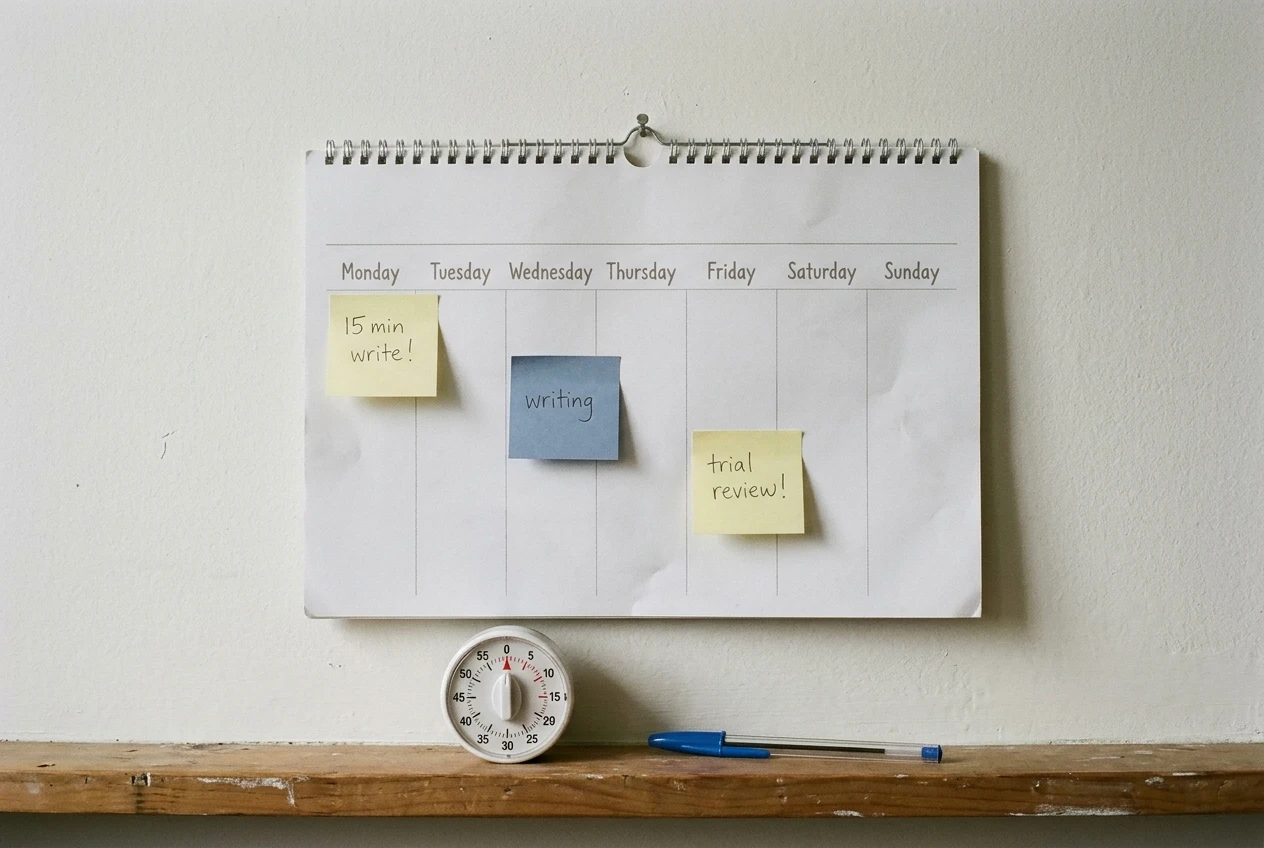
A personal fit test costs nothing if you design it before opening your wallet. Drafting two or three practice articles on a topic you care about gives you firsthand evidence on four questions:
- Whether you enjoy explaining practical solutions to strangers: Good affiliate content reads like patient advice from a knowledgeable peer, not a catalog pitch.
- How long a single useful article actually takes you to research and write: Knowing whether one 1,000-word guide takes you two hours or six hours lets you plan a realistic weekly schedule.
- Whether you can protect a weekly writing block when life gets busy: Publishing one helpful page every week beats publishing five pages in a weekend and disappearing for three months.
- Whether waiting months for search traction is a timeline you can comfortably accept: Content sites require patience before visitors and commissions appear.
If your answers after a week of practice are positive, you have earned a real reason to take the next step. If you hate the process, you found out while your cost was still $0.00—and saving your money and time is a genuinely successful outcome.
Where Wealthy Affiliate fits, and how this site looks at it honestly
Wealthy Affiliate (affiliate link) is an integrated online platform founded in 2005 where beginners learn affiliate marketing, research keywords, and build WordPress websites. OnlineAffiliate.net evaluates and promotes the platform, and we earn referral commissions when readers upgrade to a paid membership through our links. Those commissions recur for as long as a referred member remains subscribed. You should know that upfront, because it means this website has a direct financial interest if you eventually sign up.
Because of that commercial relationship, our reviews and guides are written to state plainly what the platform does well, where its limitations sit, and what you should verify for yourself before paying a cent. Read our in-depth Wealthy Affiliate Review: Is It Really Worth It? and Decoding Wealthy Affiliate: Unveiling its Inner Workings with that financial interest in mind, and always compare our notes against Wealthy Affiliate’s current official pricing and terms.
| Starting Path | Upfront Cost | What You Get | Main Trade-Off to Consider |
|---|---|---|---|
| 1. 7-Day Offline Notebook / Doc Test | $0.00 | A risk-free trial of choosing a reader question, researching facts, and timing your first full article draft. | No live website yet; strictly tests whether you enjoy the research and writing process. |
| 2. Wealthy Affiliate Starter Plan | $0.00 (No credit card required) | 1 practice website, a first business Hub, opening strategy lessons, community access, and 4,000 starter AI credits (as checked October 2026). | Starter access is intentionally limited; paid plans (Builder $29/mo, Premium $49/mo, Premium Plus+ $99/mo monthly rates) are recurring non-refundable subscriptions. |
| 3. Independent DIY WordPress Stack | $50–$150+/yr (Domain + Hosting) | Full ownership and independent selection of your domain registrar, web host, WordPress theme, and SEO plugins like AIOSEO. | Higher technical friction; you assemble and troubleshoot hosting, backups, security, and training separately. |
Want to Inspect the Workspace After Your First Draft?
Wealthy Affiliate is one optional testing ground—not a requirement for becoming an affiliate marketer. You can run the 7-day writing test below in a plain document first, then use the $0 Starter account to see if an all-in-one training and WordPress environment suits how you learn.
Affiliate disclosure: The first button is a referral link that opens in a new tab. If you later purchase a qualifying membership, OnlineAffiliate.net may earn a commission at no extra cost to you. Always verify current plan limits and billing terms before upgrading.
Your first three moves this week (plus your interactive 7-day planner)
- Choose a narrow topic you could comfortably write about for a year. Pick an activity, craft, or problem area you are already curious about or have hands-on experience solving. Because you will be explaining it every week, genuine interest matters more than theoretical commission rates at this stage.
- Read the foundational guides on this site with your wallet closed. Walk through how search intent, reader trust, and transparent disclosures work so industry terms stop feeling foreign.
- Write and time one practical beginner article. Pick one specific question a beginner in your topic asks and answer it as clearly and honestly as you can. Notice how the research feels and record how many minutes the draft takes. That is your first real data point.
Spend nothing this week. Those three actions—expanded into the interactive seven-day fit-check planner below—are enough to tell you whether you should continue.

Interactive 7-Day Zero-Dime Fit-Check Planner
Check off each step as you test the work this week. Progress saves automatically in your browser.
Can you use Wealthy Affiliate without promoting it? A question beginners ask early
Beginners ask this question early because they want to know whether joining an affiliate training platform locks them into promoting that same platform to others. Learning how to build a website on a platform and choosing which products you promote are two completely separate decisions, and keeping them separate in your head protects your independence.
You can use Wealthy Affiliate (affiliate link) to build a site about backyard composting, kayak fishing, home coffee roasting, or 3D printing without ever mentioning Wealthy Affiliate on your website. We break this down in full detail in Can You Use Wealthy Affiliate Without Promoting It?, including how niche selection shapes your whole site structure. Read that guide before you commit to any platform, especially because OnlineAffiliate.net itself earns from referrals and you deserve to hear that distinction explained openly.
Four-question knowledge check: test your beginner readiness
Before you choose your next page, click through these four quick scenarios to confirm the core principles of low-risk affiliate marketing:
1. Why do most beginners quit affiliate marketing within their first few months?
Answer: Most beginners quit because they discover they do not enjoy the week-to-week work of researching reader questions, writing helpful articles, and waiting patiently for search visibility—not because the affiliate link mechanism failed. Running a $0 writing test in week one reveals whether the routine suits you before you spend money.
2. What is the difference between a one-time commission and a recurring commission?
Answer: A one-time commission pays you once when a visitor buys a product through your link. A recurring commission pays you on the initial purchase and continues paying on each renewal cycle (monthly or annually) for as long as the referred customer stays subscribed. Regardless of payout structure, always prioritize reader fit first.
3. When and where must you disclose an affiliate link on your website?
Answer: Under the FTC Endorsement Guides (16 CFR Part 255), material financial connections must be disclosed clearly, conspicuously, and unavoidably before or right beside the affiliate link so the reader understands you may earn a commission before clicking. Burying a note only in a site footer or privacy page is not sufficient.
4. Does joining Wealthy Affiliate mean you have to promote Wealthy Affiliate?
Answer: No. Where you learn and host your website is separate from the niche you choose to serve. You can use a training platform or an independent DIY setup to build a content site in almost any hobby or consumer category and partner with third-party merchant programs that fit your audience.
Pick your next page: guides, reviews, or the beginner roadmap
Where you go next on OnlineAffiliate.net depends on which question you want to settle first:
1. Practical Writing & Publishing Guides
Learn the mechanics of shipping useful pages without getting trapped by perfectionism, endless theme tweaking, or logo design delays.
2. Honest Platform Reviews
Inspect how Wealthy Affiliate works in 2026, including current Starter, Builder, Premium, and Premium Plus+ limits, costs, and drawbacks.
3. Niche Independence & Strategy
See why learning on a platform and promoting it are separate choices, and how to pick a non-marketing topic you actually enjoy.
If you are still unsure where to begin, start on our OnlineAffiliate.net beginner roadmap and 7-day fit check, finish your first practice article for $0, and then decide for yourself whether Wealthy Affiliate’s free Starter plan (affiliate link) is worth trying as your testing ground.
Frequently asked questions for brand-new beginners
How much money do I really need to test if affiliate marketing is right for me?
You need $0.00 to test your personal fit for the work. Choosing a narrow reader problem, researching accurate facts, and writing one or two practice articles in a free document costs nothing. Only consider paying for a domain name, web hosting, or a platform membership after you confirm that you enjoy the weekly research and writing habit.
How many hours a week does a beginner content site take?
Most beginners who build steady momentum set aside 4 to 7 focused hours per week—enough time to research, outline, draft, and edit one helpful article every seven days. A calm, repeatable weekly rhythm beats a single 15-hour weekend sprint followed by a month of inactivity.
How long does it take to earn a first affiliate commission?
There is no guaranteed timeline, and some sites never earn commissions or recover their costs. Because search engines take months to crawl, index, and trust a brand-new domain, beginners should treat the first 3 to 6 months as skill development and library building rather than expecting immediate income.
Do I need technical coding skills or SEO software on day one?
No. Modern WordPress themes handle page layout without coding. During your first week, focus entirely on clear writing and answering one specific question per page. Once you launch a live WordPress site, a beginner-friendly plugin like All in One SEO (AIOSEO) (affiliate link) can guide your page titles, meta descriptions, and XML sitemaps without touching code.
Can I use AI tools to write my affiliate articles for me?
AI tools can help you brainstorm reader questions, organize outlines, or spot awkward phrasing, but you should never publish unverified AI drafts or claim firsthand product testing you did not perform. Both the FTC Endorsement Guides and Google’s people-first content guidelines require honest substantiation, accurate facts, and genuine value for the reader.

Tell Us About Your $0 Test in the Comments
If you had to write three helpful beginner articles this month without spending a dime, what topic would you test first—and what is the single biggest question holding you back right now? Share your topic idea or question in the comments below. I read every note and am glad to help you narrow down a practical first-article question.